TLDR
AI is good at putting a website together quickly, not at making the right decisions, so it tends to produce generic results that all look the same. A designer brings the judgement AI cannot. They challenge your assumptions about your own business, decide what comes first and what to leave out, protect what makes your brand recognisable and say no to things that would cost you customers. If you just need a simple website to show you are a real business, a template or an AI tool is fine. But if your website needs to win trust, support higher prices, or stand out from your competitors, you need a designer, because those things come from being different, not from looking like everyone else.
AI can build a passable website in an afternoon. Getting one that actually works for your business is a different job entirely.
With the launch of Claude Design and the attention it is getting, we wanted to share some thoughts on whether businesses still need web designers or can now build websites with tools like this instead. A client asked us this recently after sending over a competitor’s site that was clearly put together with an AI tool. It is a fair question about whether you still need designers, and one we get a lot now. The tools are good and getting better, and if you sell design for a living, pretending otherwise is the fastest way to lose trust.
So here is the honest answer. You still need designers because AI is good at making things look finished, but not good at making the right decisions. It pulls from everything it has seen before, so the output often feels generic. A designer makes the real decisions that set your business apart from competitors who are asking for something similar.
Related Articles:
Can’t AI just build the whole website now?
It can build a website. You type a few sentences about your business and you get pages, text, images and a colour scheme in the time it takes to make a coffee. For a side project or a temporary site, that can be enough and we would rather say that than sell you something you do not need.
The problem starts when the website has a real job to do. When it needs to convince a careful buyer, justify a higher price, or stand next to a competitor and still look like the better choice. That is where looks fine on its own stops working. An AI made site can look okay by itself, but it feels forgettable when you compare it to others. It misses context because it does not know who you are competing with, what your customers are unsure about, or why people drop off before enquiring.
What do AI tools get wrong when they build a website?
After looking at a fair few of them, the same problems turn up again and again.
AI can design, but it can’t judge design
AI can generate designs, but it doesn’t really understand what it is making. It doesn’t know what colours feel like or what certain styles communicate. It works by learning patterns from existing designs and repeating what often appears together. It doesn’t understand trust, luxury or elegance in a real way, only how those ideas tend to look in past work.
Human designers make decisions with intent. They think about the brand, the audience and what the design needs to communicate. They decide what something should feel like, whether that is credible, premium or innovative and build around that. That is why AI work can look fine at first but often feels generic. AI is useful for speed and ideas, but real design judgement is still a human thing.
It has no aesthetic judgement
A big part of design is taste. AI can generate designs, but it doesn’t have real taste or an understanding of beauty. Knowing what looks right for a brand and what makes it look a bit cheap. AI does not really have that, because it never has to deal with how the result turns out. We saw this clearly with a client who works in AI himself and understands exactly what these tools can do. He still came to us for the design of his crypto and payments platforms, ZixiPay and Delpa, because the judgement about how it should look, and whether people will trust it, is not something AI can do for you.

It makes everything look the same
The most common result is everything starting to look the same. AI works by guessing what usually comes next, so it tends to choose the safe and familiar option. The result looks fine, but has no real character. You could change the logo and it would still fit almost any business in the same space. It is the same trap we have written about before, the problem with web design templates, where something meant as a starting point is used as if it is a final website.
It doesn’t understand hierarchy
A page is not just nice looking sections one after another. It has an order. What does someone need to see first, then next and then before they take action? AI can give you blocks that look fine, but it does not decide what should be at the top, what should come later, or what should be removed. Removing things is a big part of good web design. Knowing what to leave out is often what makes a page work.
It can only get you to average
After many years in this field and seeing many tools come and go, one thing is clear. AI has not made design less important. It has made the basic level higher and made “looking like everyone else” more of a problem. Before, a simple website took time and money, so “good enough” could still stand out. Now anyone can make a decent site quickly, so “good enough” is everywhere. The standard has moved up. If you only meet it, people do not notice you. You just blend in.
For some businesses, that is fine. But for a business trying to reach a premium audience, it is the opposite of what you want. Those buyers judge you by how you look and what it says about you. If your website looks like everyone else’s, it makes you seem like just another option. That is the last thing a premium brand should communicate.
It struggles with real content
These sites look best with short headlines and three neat bullet points. But real content is rarely like that. Product names are long. Testimonials go on. There are pages the AI tool never thought about. Add all that, and the design starts to wobble. Real businesses are more complicated than that. AI assumes they aren’t.
Take PolyBlock, a website we built. It is a tech company that helps businesses use blockchain. Its product is not easy to explain in one sentence. So the website needs more than a headline and a few bullet points. It has to explain the problem, the solution and how everything works. AI works well for simple marketing pages, but struggles when a business has a complex story to tell.

What can a designer do that AI can’t?
The honest way to see it is not designer vs AI. It is that a designer is doing a different job from the tool.
They tell you when you’re wrong about your own business
Good design begins with understanding your business. You might say you could just feed all of that to AI yourself. Your customers, your competitors, the challenges you face. But AI can only work with the information you give it. And businesses do not always get it right. They sometimes focus on the wrong things or misunderstand why customers choose another company. AI takes those assumptions and builds on them.
That is what our discovery stage is for. It is not about collecting information you already have. It is about asking questions and checking your assumptions. We have seen many businesses realise that the real problem was different from what they first thought.
They make decisions with clear reasons behind them
Every spacing choice, every typeface, everything left off the page is a decision someone can stand behind. AI can give you ten options, but it cannot tell you which one fits your buyer, or take responsibility for that choice. That responsibility is the real value. It matters most on the big decisions.
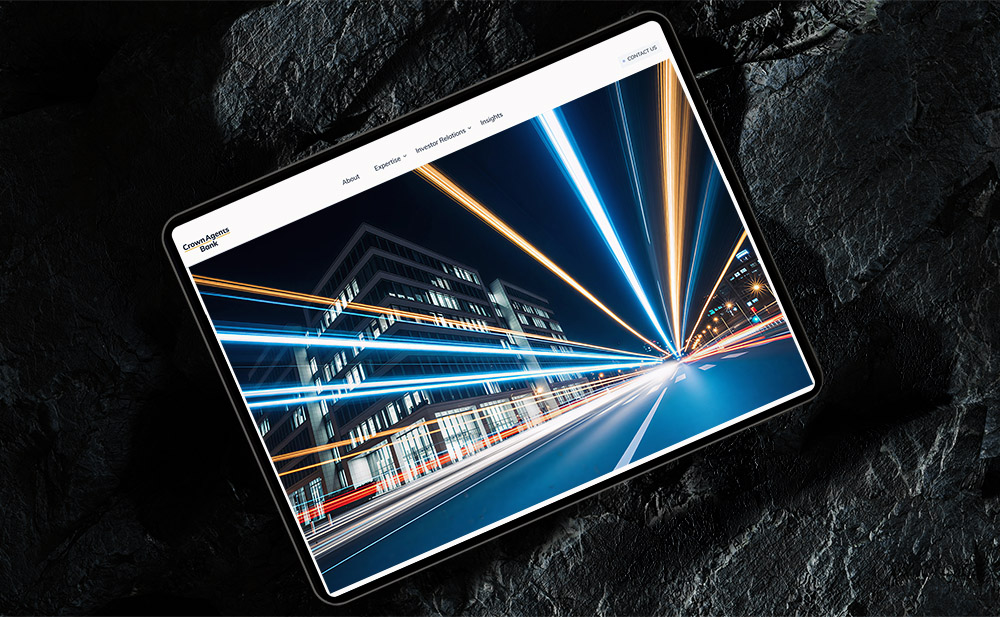
Take Crown Agents Bank. They came to us with three separate brands and websites, each made for a different audience. The real work was not making the design cleaner. It was deciding how those audiences could share one identity and what should come first, so that bringing three brands into one did not weaken any of them. AI could have merged the three into something that looks consistent. But it could not decide which audience to focus on, or what to reduce to make space for it. There is no most likely answer to that. It is a choice someone has to make.
They protect what makes you recognisable
A brand matters because it stays the same long enough for people to recognise it. People get used to it over time, every time they see the same name, colours, and style. A competitor can copy your colours in a day. What they cannot copy is the time people have spent learning to connect those colours with your business.
AI makes it easy to keep changing things. A new banner, a different style, small updates all the time. Each change feels small, but over time it can make the brand less clear. A designer’s job is to protect what people recognise, even when it is easy to change things. And to know when a brand should change and when it should stay the same.
They direct the tools instead of competing with them
Web design agencies doing good work right now are not ignoring AI, they are using it. A designer can generate many options quickly then throw most of them away because the hard part has never been making options, it is knowing which one is right for this brand, this audience and this goal and being able to explain why. That judgement, choosing, editing and standing behind the final decision, is the real job. AI is a fast, tireless helper but it is not a good art director because it has no opinion and no responsibility when the result does not work.
They know when to say no
Probably the most underrated part of the job is saying no to things that do not help. The fifth call to action, the pop up that appears as soon as someone lands on the page, the carousel nobody clicks through, the trend that will look old in a few months. AI is built to give you what you ask for. A good designer will sometimes tell you that what you asked for will cost you customers and that is worth much more.
Where does AI genuinely help?
None of this means we are against AI. We use these tools ourselves. Saying AI is useless would be just as wrong as saying it can do the whole job. It is good at first drafts, the kind you change straight away. It is useful for exploring early ideas, writing placeholder copy so a layout is not judged against Lorem ipsum, summarising research and handling the repetitive, fiddly work, like resizing one banner into twenty ad sizes or clipping backgrounds out of photos, that used to eat hours.
So, use it for the basic structure, but keep it away from the decisions that affect whether a buyer trusts you.
When do you need a designer if AI can already build a website
Here is the part most agencies won’t put in writing, so we will. You don’t always need one.
If your website only needs to exist, to show you are a real company with a phone number, AI tools or a ready-made template will probably do the job, and spending a lot of money would not make sense. We would say that directly.
The more your website has to do, the more you need a designer. If it needs to build trust, support higher prices, or help you stand out from competitors, then “average” is not good enough. Those situations are won by being different, not by looking generic.
A private bank or venture capital firm cannot afford to look like a default website, because that is exactly what they are trying to avoid. For Namier Capital, a venture capital firm, the job was to feel distinct in a crowded field rather than blend into it. It is the kind of problem we handle most often in our financial services web design.
Final thought on why do you still need designers in the age of AI?
We have tried Claude and tools like it ourselves. They are useful for getting ideas down fast and building simple websites. But once things get more serious, they start to fall short. The main issue is taste and judgement. Knowing what actually feels right for a specific brand, not just what looks fine based on patterns. For basic sites it can work. But for anything where trust, positioning and perception matter, you still need a web designer.

Andrew began his career in web design and development in the late 1990s. His eagerness to embrace the medium saw Andrew setting up Reactive Graphics in 2004. With over 20 years plus working as a London web designer supporting a wide range of clients, Andrew’s experience in web design, web development and graphic design have helped him to build a growing business.